 Odi Productions
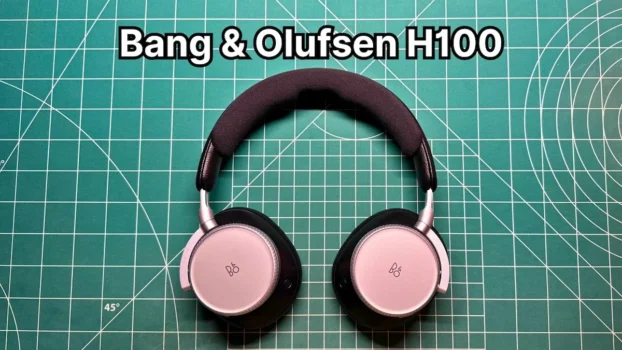
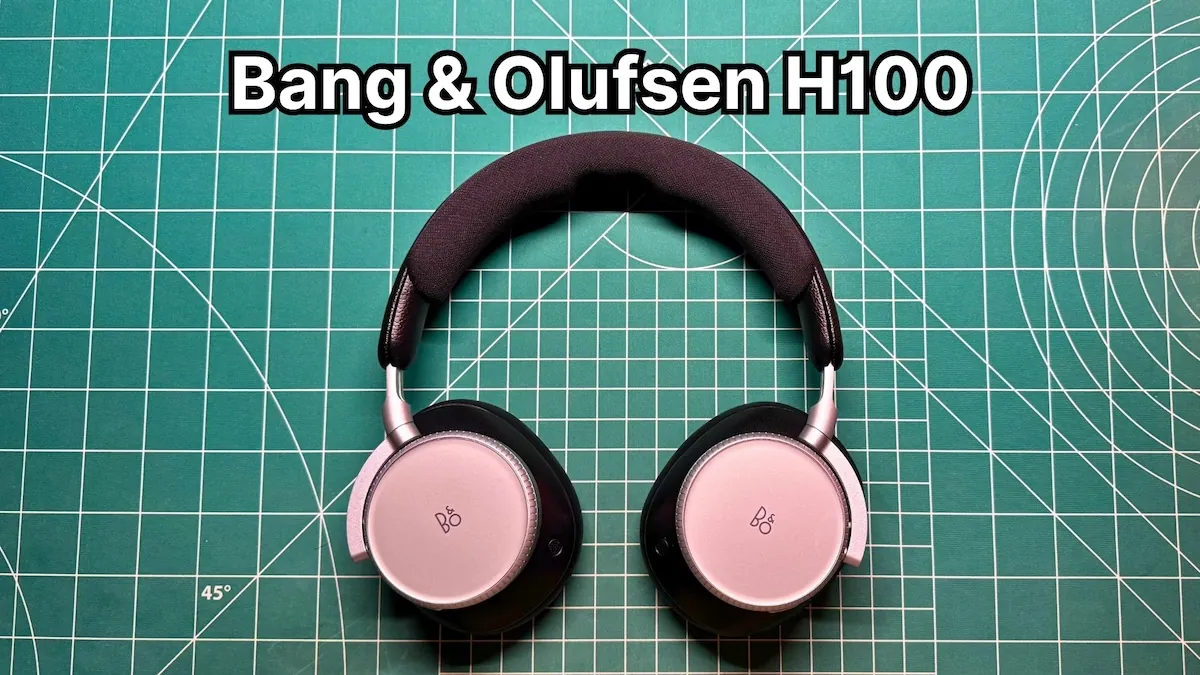
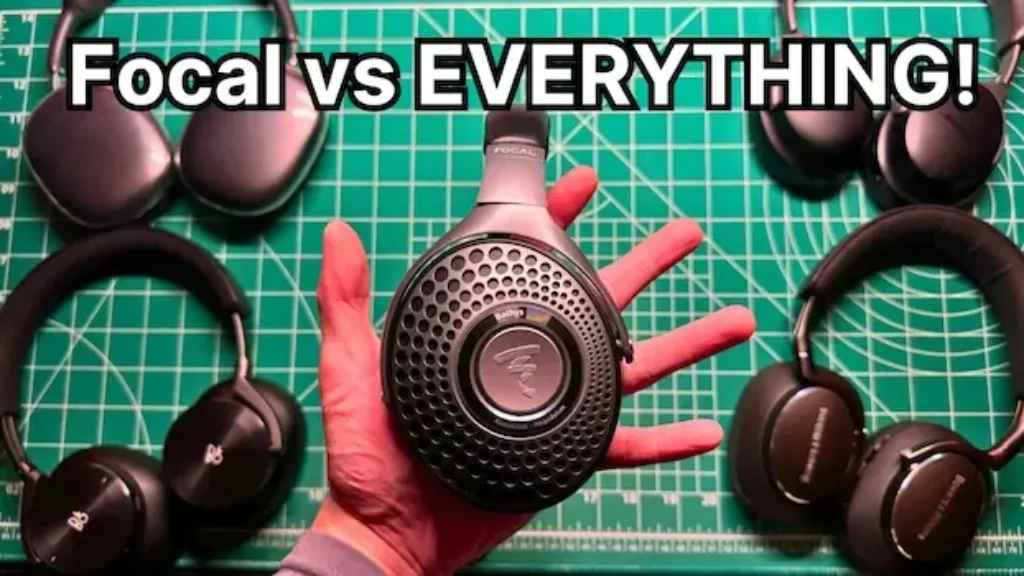
In this article, I’m going to share my HONEST Bang & Olufsen Beoplay H100 review for those who are wondering whether they are WORTH IT. I’ll also be comparing the Bang & Olufsen Beoplay H100 vs Focal Bathys MG, Dali IO-12, Sennheiser HDB 630, Bowers and Wilkins Px8 S2, Sony WH-1000XM6, Apple AirPods Max, and more!
I’m going to do my best to share whether these headphones are worth it, and ideally who these headphones are for. I’ve owned these headphones for a while now and have quite a few thoughts.
I’ll be sharing my critical opinion with 10 years of experience as a professional music producer, audio engineer, and tech journalist.
Let’s dive right in!
Bang & Olufsen Beoplay H100 Headphones review in short
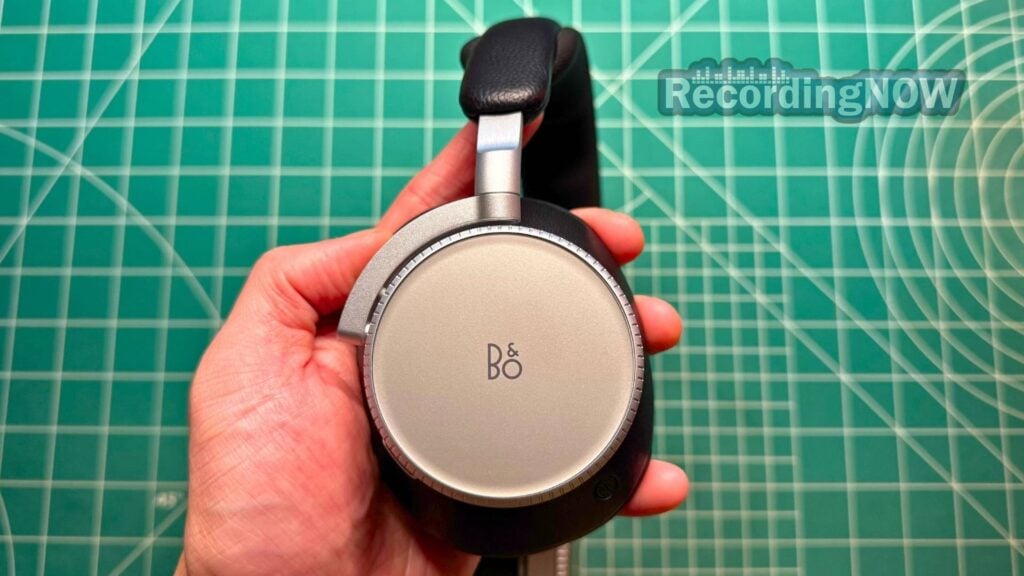
The Bang & Olufsen Beoplay H100 boasts the best build quality and most premium materials tested to date, a very fun and detailed sound, and strong noise cancelling performance. It’s just uber-expensive. Competes with Focal Bathys MG, Dali IO-12, Bowers & Wilkins Px8 S2, Sennheiser HDB 630, Sony WH-1000XM6, Apple AirPods Max, and Bowers and Wilkins Px7 S3.
Pros and Cons
- Fun, detailed sound quality
- Best build quality tested
- Strong noise cancelling performance
- Expensive!
- There’s much better value buys
- V-shaped tuning not for everyone
- No high-res codec support
Order the LATEST VERSION for the LOWEST PRICE AVAILABLE (Do NOT pay retail):

Disclosure: These affiliate links may provide a discount and in return, give us a commission in order to keep this website 100% independent to ensure honest unfiltered reviews 🙂
Sound Quality
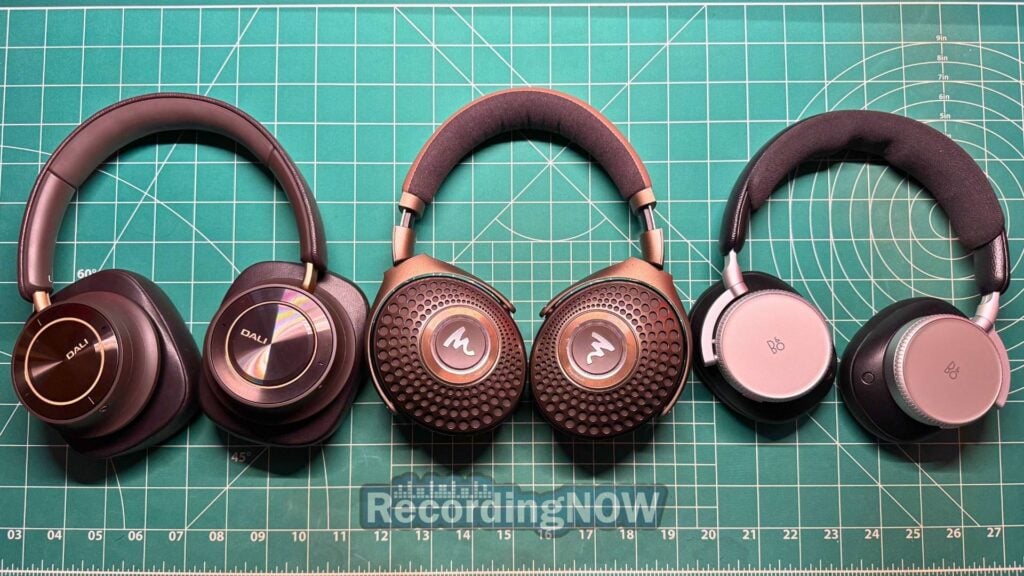
Initial listening impressions…
My first experience with this brand is the previous Bang & Olufsen H95 headphones, which were quite a fun and detailed headphone to listen to.
Hearing about the new and improved (not to mention expensive) H100 had me intrigued.
I was thinking that if B&O could improve upon the H95, then the H100 would surely be pretty good.
Now I want to get one technical nitpick out of the way first: The H100 currently does NOT support any hi-res Bluetooth codecs and is limited to AAC and SBC (16-bit / 44.1 kHz). However, it does go all the way up to 24-bit / 96 kHz in Wired USB-C mode.
When the H100 was released, there was some marketing materials that suggested LDAC would be added via a firmware update, but this has since been removed.
For a headphone costing over $2k USD, this is a bit of a shame. You’d want to get the best possible wireless transmission in the market as many more affordable headphones have LDAC or aptX.
Listening in the fullest quality Wired mode does have a noticeable lift in overall clarity and has a slightly cleaner sound, although the H100 does still sound quite good and detailed in wireless mode.
If you’re wondering whether the H100 improves upon the previous H95, the immediate answer is YES, and this is heard rather quickly.
Sound Profile
Like the H95 before it, the H100 falls more towards the “consumer-friendly” V-shaped end of the spectrum, clearly pushing forward the bass and especially the treble.
The H100 is very crisp-sounding and detailed with its treble-forward sound signature, backed by a very satisfying sub-bass that is slightly improved upon the H95, which also has excellent bass.
The mids are a bit lacking for my tastes, but they are indeed there behind the treble and bass.
So although the H100 is limited to AAC in terms of wireless codec, the sound profile actually makes up for it and these sound incredibly detailed with solid separation and layering.
I would say the overall sound is more open-sounding and “refined” versus the H95, which was a bit more one-dimensional in comparison.
Full Sound Test
Due to its sound profile and the 40mm custom titanium drivers, the H100 is very clearly towards the “bright” and “energetic” end of the spectrum.
When you combine the treble detail, airiness, and separation, the H100 has a ton of energy and definitely does not try to go for being “neutral” or having accurate timbre.
Instead, the H100 has more of a sizzle and sparkle due to its treble, which comes off supremely detailed albeit a tad artificial.
Now aside from the sharp treble, the bass response is noteworthy and is one of the most satisfying in the class.
I really enjoyed the bass on the H95, and the H100 is no different with great sub-bass extension down to the lowest frequencies.
The H100’s bass is impactful but focused and controlled.
In terms of soundstage, this is definitely one of the most open-sounding wireless headphones tested, which is rarer as these are all closed-back.
Overall, the H100 is a very fun and decently-capable headphone to listen to, but it does have its limits due to both its tuning and the hardware compared to the most elite options in the class. Not to mention the lack of hi-res codec support.
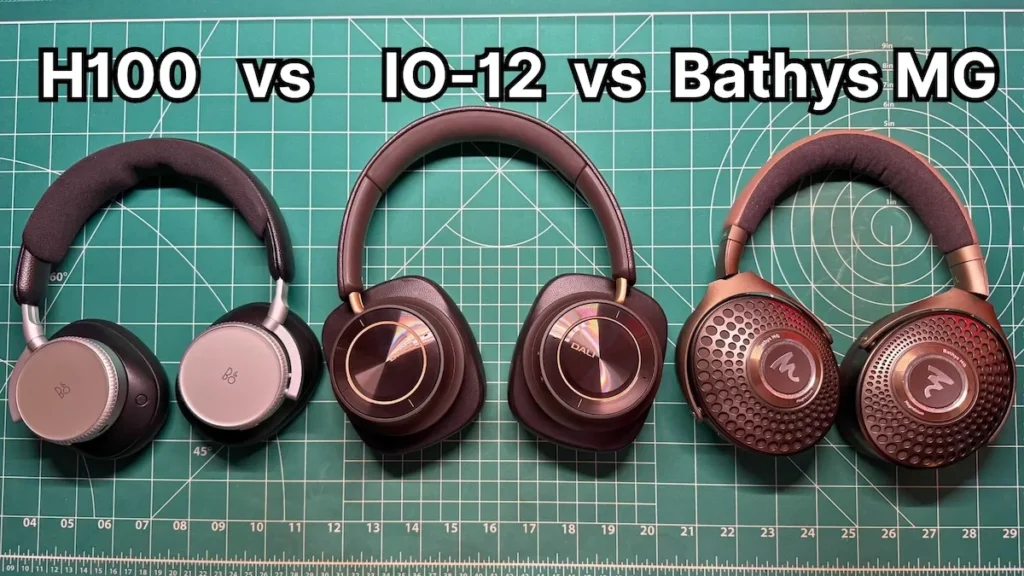
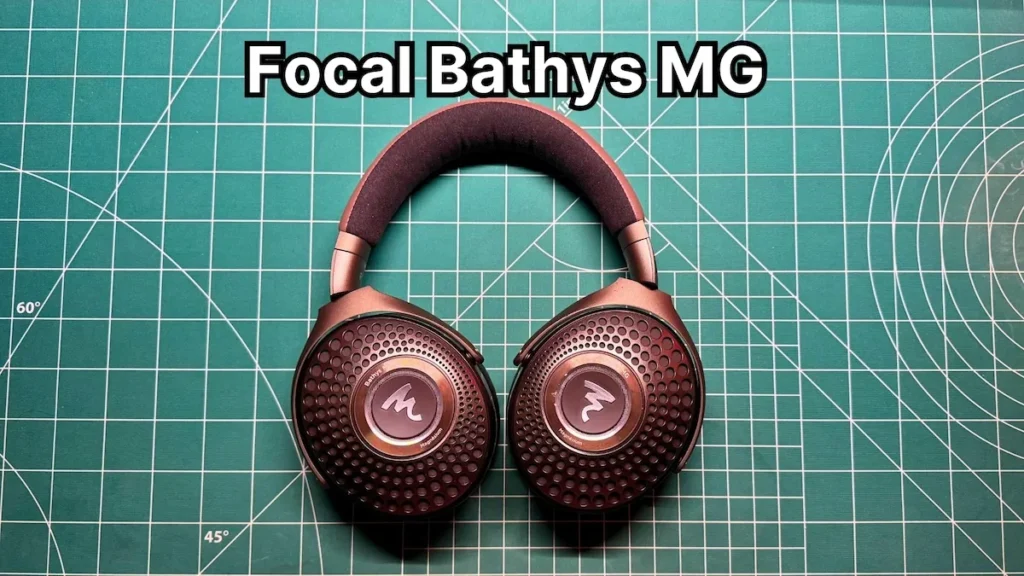
vs Focal Bathys MG
These are almost complete opposites in sound profile, as the Bathys MG comes off sounding much thicker in the midrange, smoother in the treble, warmer, and darker as a whole.
The H100 has a ton of treble energy and is “thinner-sounding”, although arguably more detailed in the treble, which sounds almost rolled-off in the Bathys MG stock by comparison.
The H100’s weakness would be the mids, and this is where the Bathys MG absolutely shines.
The Bathys MG simply sounds much more realistic and accurate in its timbre for vocals and instruments.
Both are two of the most open-sounding, but the sound profile of the H100 makes it sound airier and more sharply detailed.
The bass response on both is excellent and satisfying, with the H100 arguably having a touch more sub-bass quantity, while the Bathys MG has a punchier mid-bass.
I put the Bathys MG’s technical level just a touch above the H100, and it’s a better all-arounder for most genres due to its relatively more neutral and warmer sound profile.
Also, it supports aptX Adaptive which results in higher bitrate and resolution on paper, which also contributes to this edge in sound quality.
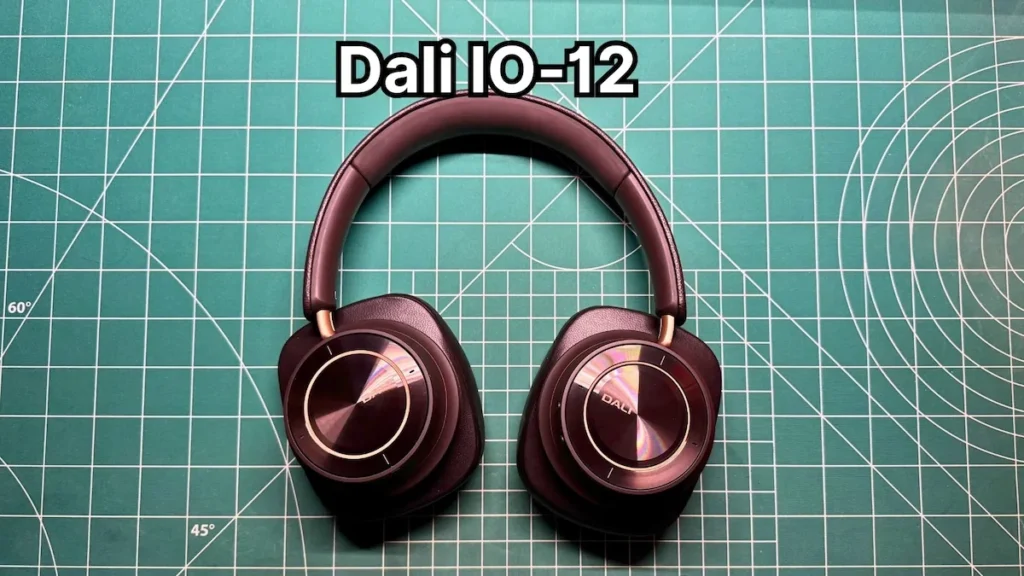
vs Dali IO-12
The Dali IO-12 is a nice midway between the sound profile of the Bathys MG and the H100.
It’s brighter than the Bathys MG, but more neutral than the H100 with better mids and a more balanced tonality.
The IO-12 is the most open-sounding wireless headphone in the class, and its separation and imaging is simply best-in-class, putting its technical level a touch above the H100.
One area the H100 has the IO-12 beat is the bass department, as the IO-12 is a bit leaner but very clean in the bass region.
The IO-12 also supports aptX Adaptive which results in higher bitrate and resolution on paper, which also contributes to this edge in sound quality.
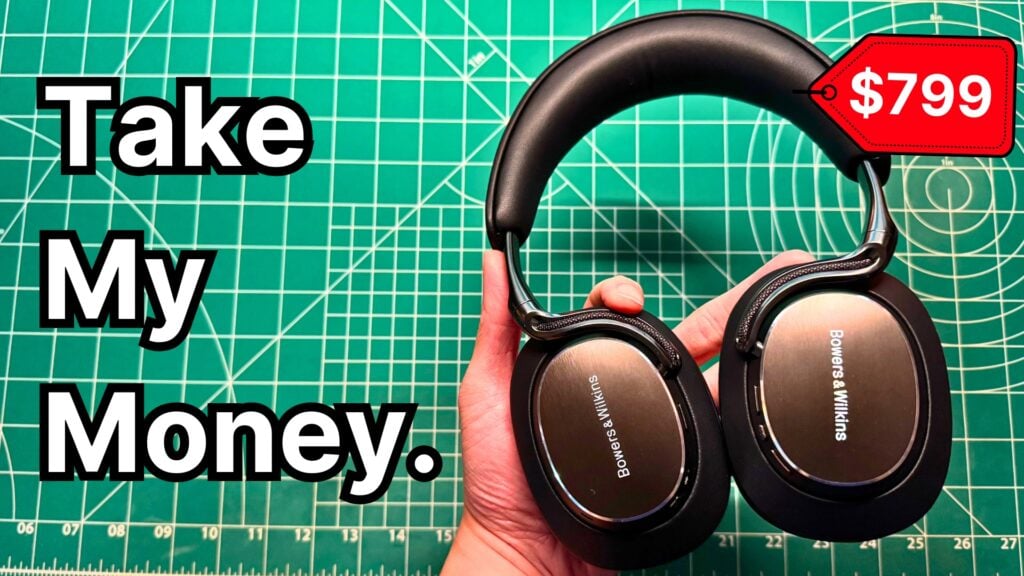
vs Bowers & Wilkins Px8 S2
These have more similar profiles, both being towards the more consumer-friendly and “fun” sound.
The Px8 S2 is the warmer-sounding and arguably more “musical”, while the H100 comes off more analytical and detailed.
The Px8 S2 also supports aptX Adaptive to give it an edge.
Despite that, I put both of these at about the same level of technical sound quality.
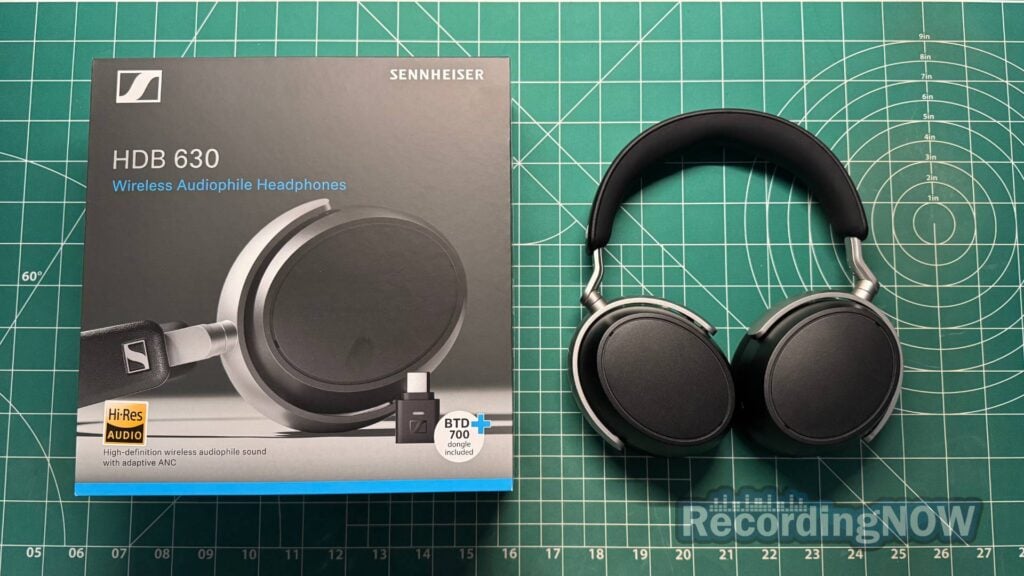
vs Sennheiser HDB 630
Now while the Bathys MG was “almost” the opposite of the H100’s sound profile, the HDB 630 is actually the exact opposite of the H100.
The HDB 630 neutral and accurate sound signature is the perfect foil to the H100’s fun, V-shaped, consumer-friendly sound.
Both are technically excellent in their own way, with very impressive detail.
Audiophiles will likely lean towards the HDB 630 for critical listening, while the H100 is more for fun.
The HDB 630 also supports aptX Adaptive, giving it a slight advantage wirelessly.
Overall, I actually have the HDB 630 tied with the H100 in sound quality, all things considered. This is mighty impressive considering the HDB 630 costs just $499 to the H100’s $2,200 price tag.
Sound Quality Score: 9.5 out of 10
Comfort
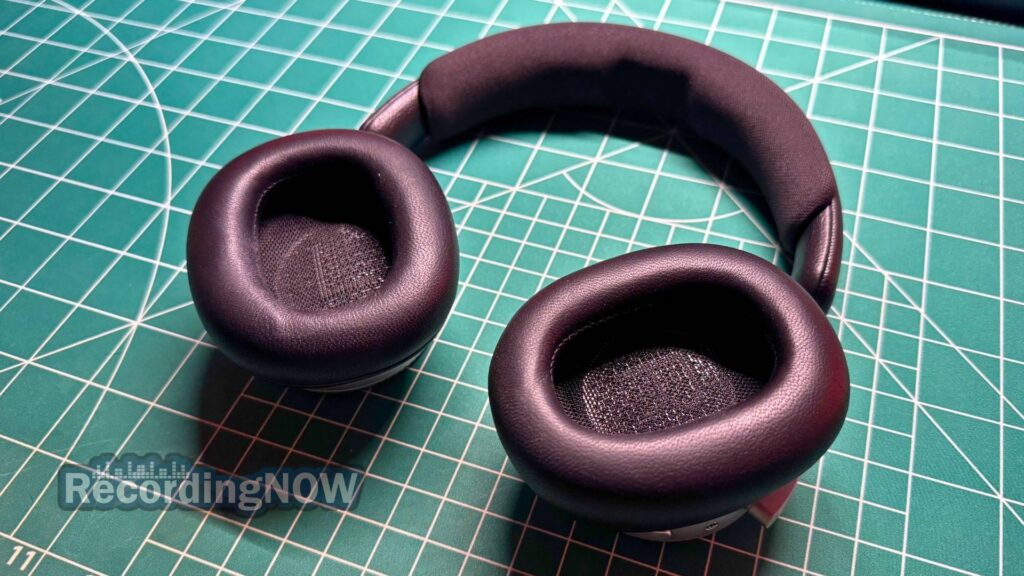
The Bang & Olufsen Beoplay H100 is one of the heaviest headphones we’ve tested:
- Bose QuietComfort (2023 model) – 236.1 grams
- Sony WH 1000XM5 – 245.9 grams
- Sony WH 1000XM4 – 251.6 grams
- Bose QuietComfort Ultra (1st gen) – 254.4 grams
- Bose QuietComfort Ultra (2nd gen) – 262.2 grams
- Beats Studio Pro – 268.6 grams
- Sennheiser Momentum 4 – 292.9 grams
- Bowers and Wilkins Px7 S2e – 305.2 grams
- Bowers & Wilkins Px8 S2 – 312.0 grams
- Sennheiser HDB 630 – 313.4 grams
- Sonos Ace – 318.1 grams
- Bowers & Wilkins Px8 – 320.1 grams
- Bang & Olufsen H95 – 323 grams
- Focal Bathys – 350 grams
- Focal Bathys MG – 365.5 grams
- Bang & Olufsen H100 – 375.6 grams
- Dali IO-12 – 379.4 grams
- Apple AirPods Max – 387.8 grams
The H100 is slightly above average for comfort, but definitely not in the elite tier.
What’s holding the H100 back is partly its weight combined with a decently firm clamping force.
I do think the headband and earcup cushioning does a decent job to make them feel more comfortable.
Also, the earcup interior space is good, with the tips of my ears just slightly touching the fabric, but not pressing against anything solid.
Comfort Score: 8.0 out of 10
Features / Battery Life / Build Quality / Practicality
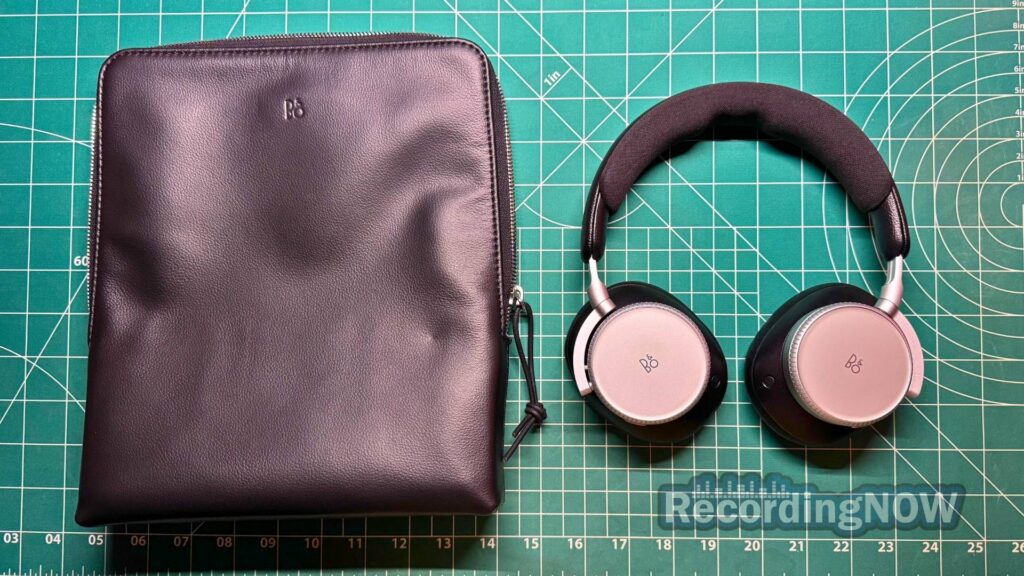
Features
The Bang & Olufsen Beoplay H100 was released in September 2024 and has the typical modern wireless ANC headphone features:
- Bluetooth 5.3 (NO high-res codec)
- Lossless audio (24-bit / 96 kHz) via Wired USB-C
- Multi-point connectivity
- Spatial Audio with Dolby Atmos and Head-Tracking
- Lossless Audio via wired USB-C cable
- Multiple built-in microphones for taking calls
- Active Noise Cancelling
- Transparency Mode
- Includes a large-sized premium Soft Shell leather case
Bang & Olufsen Beoplay H100 Battery Life
The Bang & Olufsen H100 has 34 hours of battery life on a single charge.
- Marshall Monitor III – 70 hours (ANC on), 100 hours (ANC off)
- Cambridge Audio Melomania P100 SE – 60 hours (ANC on), 100 hours (ANC off)
- Audeze Maxwell – 80 hours (no ANC included)
- Sennheiser HDB 630 – 60 hours
- Sennheiser Momentum 4 – 60 hours
- Dali IO-12 – 35 hours (ANC on)
- Bang & Olufsen Beoplay H100 – 34 hours (ANC on)
- Focal Bathys MG – “Over 30 hours” (ANC on)
- Sony WH-1000XM6 – 40 hours (ANC off), 30 hours (ANC on)
- Bose QuietComfort Ultra (2nd Gen) – 30 hours
- Sony WH-1000XM5 and WH-1000XM4 – 30 hours
- Bowers & Wilkins Px7 S3 and Px8 – 30 hours
- Sonos Ace – 30 hours
- Bose QuietComfort Ultra (1st Gen) – 24 hours
- AirPods Max – 20 hours
In my testing, I found this figure to be accurate.
34 hours is slightly above-average for the class.
Build Quality
The build quality of the H100 is second-to-none, which is to be expected due to being the most expensive wireless headphone in its class.
The H100 uses a mix of the most premium materials: soft lambskin leather on earcups and headband, solid aluminum for the headband core and hinges, scratch-resistant hardened glass for the earcup exterior, and titanium drivers.
There are many reasons to criticize the price of the H100, but build quality is certainly not one of them.
Features / Battery Life / Build Quality / Practicality Score: 9.5 out of 10
Bang & Olufsen Beoplay H100 Noise Cancelling Performance
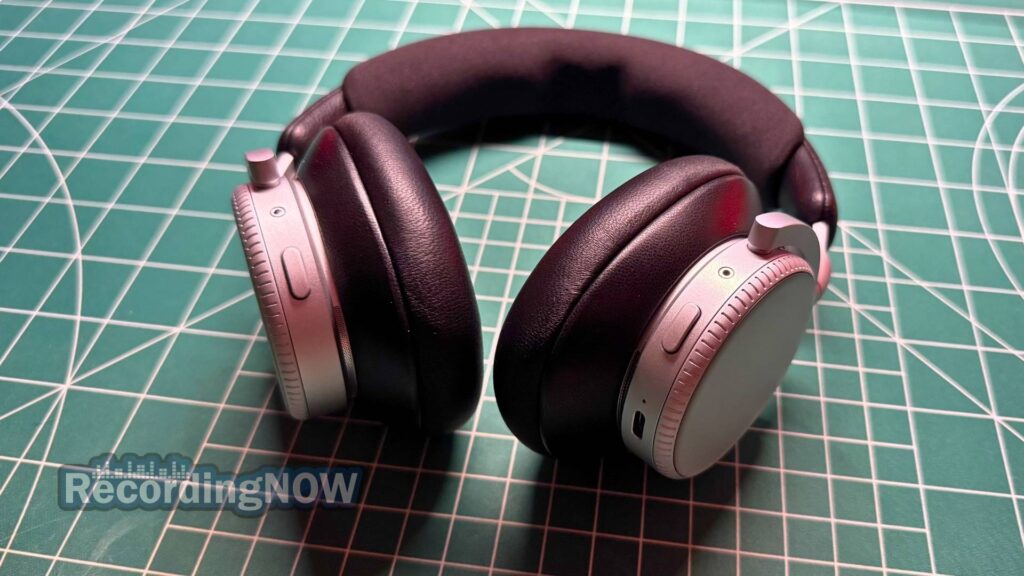
Now one area where the H100 rather surprised me was its noise cancelling performance, which is really quite solid across the frequency range.
The H100 utilizes 10 “studio-grade” microphones to achieve its noise cancelling performance.
I don’t quite put it in the “elite” tier of the likes of the Sony WH-1000XM6, Bose QuietComfort Ultra 2, or AirPods Max, but it’s right below it.
The H100 excels more towards the low frequencies of airplane engines and is solid in the mid frequencies of human speech.
Compared to its “audiophile” rivals like the Bathys MG, Dali IO-12, and Sennheiser HDB 630, the H100 has the best ANC of the bunch.
Noise Cancelling Score: 8.5 out of 10
Value
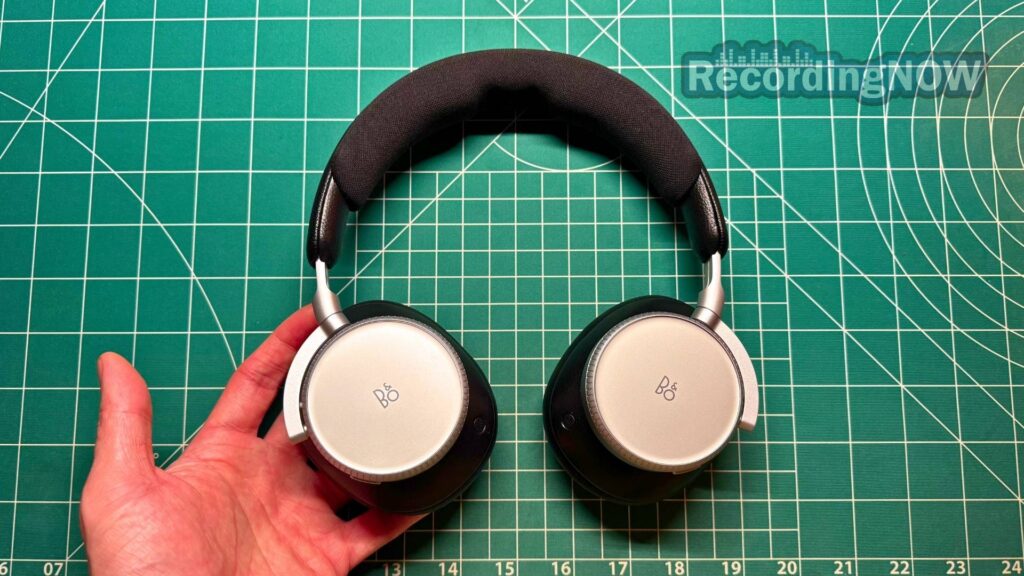
Interestingly, the Bang & Olufsen H100 debuted at $1,549 USD, but has shot up to $2,200 since then.
Quite a shame, as the initial price upon release would really make a much better case for value than the astronomical price today.
Simply put, this is a fairly ridiculous price.
The Focal Bathys MG retails at $1,499 USD, while the Dali IO-12 retails at $1,750. Both sound arguably better than the H100.
The Bowers & Wilkins Px8 S2 is closer in build quality and tied for sound quality, which can be had for less than half the price at $799 USD.
The Sennheiser HDB 630 is tied for sound quality in my book, and is only $499. Granted, it doesn’t hold a candle in build quality with its mostly-plastic construction, and the H100 does have superior noise cancelling.
Price aside, the H100 is a fantastic product overall when you factor in its sound quality, noise cancelling performance, and premium materials.
So it does justify a fair bit of that premium, but not all of it.
Value Score: 5.0 out of 10
Is the Bang & Olufsen Beoplay H100 Worth it?
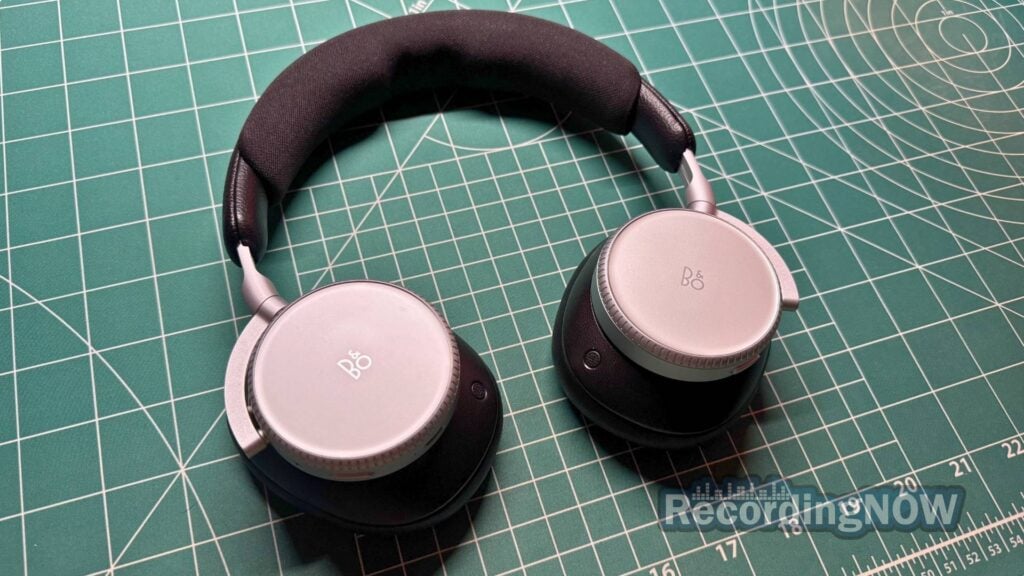
At $2,200 USD, it’s incredibly difficult to justify the H100.
Don’t get me wrong, I actually really like this product as a whole and thoroughly enjoy using it.
It has the best build quality and most premium materials tested to date, very fun and detailed sound, and strong noise cancelling performance.
But it’s not a perfect headphone, as it could improve in comfort and at the very least include high-res codec support.
There are many cheaper alternatives today that will fit the bill such as the Focal Bathys MG, Dali IO-12, Bowers & Wilkins Px8 S2, and Sennheiser HDB 630.
That said, if you still want these and can afford it, go for it. They’re still a great product when it’s all said and done.
Also, if you’d like to support 100% independent unbiased reviews, consider using my affiliate links to shop and even save money! Thank you.
Some very Strong Alternatives in this class of noise cancelling headphones are:
- Focal Bathys MG
- Dali IO-12
- Sennheiser HDB 630
- Bowers & Wilkins Px8 S2
- Focal Bathys
- Audeze Maxwell
- Bose QuietComfort Ultra 2nd Gen
- Sennheiser Momentum 4
- Bowers and Wilkins Px7 S3
- Sony WH-1000XM6
- Apple AirPods Max
- Sonos Ace
Some Relevant Comparisons in this class of noise cancelling headphones are:
- Sennheiser Momentum 4 vs Bose QuietComfort Ultra
- Bose QuietComfort Ultra vs Apple AirPods Max
- Sonos Ace vs Bose QuietComfort Ultra
Overall Scoring Breakdown
Sound Quality (50% of score): 9.5 / 10
Comfort (10% of score): 8.0 / 10
Features / Battery Life / Build Quality / Practicality (10% of score): 9.5 / 10
Noise Cancelling (20% of score): 8.5 / 10
Value (10% of score): 5.0 / 10
Overall: 8.70 / 10
Order the LATEST VERSION for the LOWEST PRICE AVAILABLE (Do NOT pay retail):
Disclosure: These affiliate links may provide a discount and in return, give us a commission in order to keep this website 100% independent to ensure honest unfiltered reviews 🙂
How We Tested and Our Methodology
RecordingNOW.com is a 100% independent publisher with over 10 years of experience testing and reviewing consumer electronics and headphones.
We currently purchase all of the products we test with our own money, and are not paid by any company or manufacturer to influence our opinions or decisions.
After purchasing the product, we conduct up to hundreds of hours of detailed hands-on testing in a controlled, acoustically-treated environment. Noise cancelling performance is tested in the real-world, primarily on airplane flights, coffee shops, and walking around large metropolitan city environments.
ODi Productions is our resident expert and author of this article, with 10 years of experience as a professional music producer, tech journalist, and audiophile.
Read Next
Best Wireless Noise Cancelling Headphones (40+ Tested!)

Focal Bathys MG vs Dali IO-12 vs Bang & Olufsen H100
Bowers & Wilkins Px8 S2 Review


Bowers and Wilkins Px7 S3 Review

Bose QuietComfort Ultra 2nd Gen Review